Microbial pathogens include microscopic organisms such as bacteria, viruses, and
protozoans, as well as multicellular organisms such as helminths (worms) and other
parasites. Accurate microbial identification is critical for the optimal treatment of
patients presenting with infection. Laboratory tests are often essential for guiding
effective intervention. A wide range of testing options for infectious disease pathogens
is available and varies by organism. These include in vitro detection of an antibody or
antigen (serology), culture-based methods, and molecular assays that detect microbial
DNA or RNA. The types of organisms likely to cause infection can vary significantly with
geography. This section will address more prevalent microbial and parasitic infections.

You Can Download or read Medical Books Online This Is Volunteer Contribution to Somali Medical Students By Muhammad Anmol Asghar
Monday, April 20, 2015


Introductionin human parasitology and parasitic diseases
Medical (human) parasitology
• Human parasitology is the study of those organisms
which parasitise humans
• According to the very broad definition of parasitology,
parasites should include the viruses, bacteria, fungi,
protozoa and metazoa (multi-celled organisms) which
infect their host species
• However, for historical and other reasons the first three
have been incorporated into the discipline of Microbiology

• Human parasitology is the study of those organisms
which parasitise humans
• According to the very broad definition of parasitology,
parasites should include the viruses, bacteria, fungi,
protozoa and metazoa (multi-celled organisms) which
infect their host species
• However, for historical and other reasons the first three
have been incorporated into the discipline of Microbiology
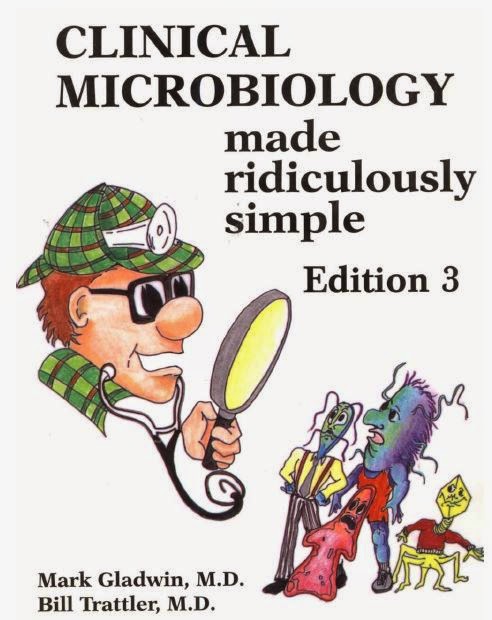
Clinical Microbiology Made Ridiculously Simple 3rd Edition
A well-developed knowledge of clinical microbiology is
critical for the practicing physician in any medical field.
Bacteria, viruses, and protozoans have no respect for
the distinction between ophthalmology, pediatrics,
trauma surgery, or geriatric medicine. As a physician
you will be faced daily with the concepts of microbial
disease and antimicrobial therapy. Microbiology is one
of the few courses where much of the "minutia" is regularly
used by the practicing physician.
This book attempts to facilitate the learning of microbiology
by presenting the information in a clear and
entertaining manner brimming with memory aids.
Our approach has been to:
1) Write in a conversational style for rapid assimilation.
2) Include numerous figures serving as "visual memory
tools" and summary charts at the end of each chapter.
These can be used for "cram sessions" after the
concepts have been studied in the text.
3) Concentrate more on clinical and infectious disease
issues that are both interesting and vital to the actual
practice of medicine.
Preface
D
4) Create a conceptual, organized approach to the organisms
studied so the student relies less on memory
and more on logical pathophysiology.
The text has been updated to include current information
on rapidly developing topics, such as HIV and
AIDS (vaccine efforts and all the new anti-HIV medications),
Ebola virus, Hantavirus, E. coli outbreaks, Mad
Cow Disease, and brand-new antimicrobial antibiotics.
The mnemonics and cartoons in this book do not intend
disrespect for any particular patient population or
racial or ethnic group but are solely presented as memory
devices to assist in the learning of a complex and important
medical subject.
We welcome suggestions for future editions.
MARK GLADWIN, MD
BILL TRATTLER, MD
critical for the practicing physician in any medical field.
Bacteria, viruses, and protozoans have no respect for
the distinction between ophthalmology, pediatrics,
trauma surgery, or geriatric medicine. As a physician
you will be faced daily with the concepts of microbial
disease and antimicrobial therapy. Microbiology is one
of the few courses where much of the "minutia" is regularly
used by the practicing physician.
This book attempts to facilitate the learning of microbiology
by presenting the information in a clear and
entertaining manner brimming with memory aids.
Our approach has been to:
1) Write in a conversational style for rapid assimilation.
2) Include numerous figures serving as "visual memory
tools" and summary charts at the end of each chapter.
These can be used for "cram sessions" after the
concepts have been studied in the text.
3) Concentrate more on clinical and infectious disease
issues that are both interesting and vital to the actual
practice of medicine.
Preface
D
4) Create a conceptual, organized approach to the organisms
studied so the student relies less on memory
and more on logical pathophysiology.
The text has been updated to include current information
on rapidly developing topics, such as HIV and
AIDS (vaccine efforts and all the new anti-HIV medications),
Ebola virus, Hantavirus, E. coli outbreaks, Mad
Cow Disease, and brand-new antimicrobial antibiotics.
The mnemonics and cartoons in this book do not intend
disrespect for any particular patient population or
racial or ethnic group but are solely presented as memory
devices to assist in the learning of a complex and important
medical subject.
We welcome suggestions for future editions.
MARK GLADWIN, MD
BILL TRATTLER, MD
Medical Parasitology
PREFACE
This lecture note is useful to students of health science, medicine and other
students and academicians. It is believed to provide basic knowledge to students
on medical parasitology. It also serves as a good reference to parasitologists,
graduate students, biomedical personnel, and health professionals. It aims at
introducing general aspects of medically important parasites prevalent in the
tropics and in Ethiopia in particular. It is our belief that this note will contribute
much in alleviating the shortage of Parasitology texts.
Students preparing to provide health care in their profession need solid
foundation of basic scientific knowledge of etiologic agents of diseases, their
diagnosis and management. To face the fast growing trends of scientific
information, students require getting education relevant to what they will be doing
in their future professional lives. Books that are of manageable size are
increasingly important in helping students learn the seemingly overwhelming
amount of information they must absorb.

This lecture note is useful to students of health science, medicine and other
students and academicians. It is believed to provide basic knowledge to students
on medical parasitology. It also serves as a good reference to parasitologists,
graduate students, biomedical personnel, and health professionals. It aims at
introducing general aspects of medically important parasites prevalent in the
tropics and in Ethiopia in particular. It is our belief that this note will contribute
much in alleviating the shortage of Parasitology texts.
Students preparing to provide health care in their profession need solid
foundation of basic scientific knowledge of etiologic agents of diseases, their
diagnosis and management. To face the fast growing trends of scientific
information, students require getting education relevant to what they will be doing
in their future professional lives. Books that are of manageable size are
increasingly important in helping students learn the seemingly overwhelming
amount of information they must absorb.
The HemoCue Hb 201+ System
•Pull out slide holder to ready position
•Press left button to turn on analyzer
•Analyzer performs a selftest
•Once selftest passes, analyzer will display 3 flashing dashes
•Fill a cuvette with sample
•Place the cuvette in the cuvette holder
•The result is displayed within 15-60 sec

Guidelines On Standard Operating Procedures For Haematalogy
As a medical specialist in the laboratory, experienced haematologists use their expertise in cytopathology histopathology, selection and use of ancillary tests such as flow cytometry and molecular and cytogenetics, interpretation of coagulation and haemoglobin and other special studies in the diagnosis and management of patients with haematological and other disorders. They also provide guidance to clinicians about appropriate and safe pre-transfusion testing and selection of blood products for transfusion and clinical advice regarding transfusion complications. They offer expert opinion to clinicians as to the rational choice, interpretation and potential limitations of haematological testing. They have expertise in laboratory procedures for accessioning, management and processing of specimens, to ensure that accurate and high quality material is available for the formulation of diagnostic opinions. They advise and work with scientific staff in relation to laboratory procedures. They manage the haematology laboratory, being mindful of the need for appropriate and cost effective ordering of investigations, quality assurance and safety. They guide and teach medical and other trainees in the discipline of haematology.
The clinical haematologist provides a comprehensive approach to the diagnosis, prognosis and management of patients with primary haematological disorders and consultative opinion/support for patients whose other medical conditions/therapy affect the haematopoietic/vascular system.

The clinical haematologist provides a comprehensive approach to the diagnosis, prognosis and management of patients with primary haematological disorders and consultative opinion/support for patients whose other medical conditions/therapy affect the haematopoietic/vascular system.
Hematology Trainee Handbook 2015
INTRODUCTION
Haematology encompasses both clinical and laboratory aspects of primary disorders of the blood as well as how other diseases affect the blood. Primary haematological diseases can be congenital or acquired and include the various forms of leukaemia and lymphoma, some forms of anaemia and diverse blood clotting/bleeding disorders. Transfusion medicine also falls into the specialty of haematology.
All haematology training must be undertaken in accredited laboratories and under supervision approved by the Board of Education and Assessment. Trainees need to discuss in detail with their supervisors how to achieve a sound knowledge of all aspects of laboratory haematology and transfusion medicine. If the trainee is not exposed to specific specialised techniques in their laboratory it is their responsibility, in conjunction with their supervisor, to ensure techniques are understood. Visits should be organised to departments where specialised investigations are performed.
To gain the FRCPA in haematology requires five (5) years of accredited training and satisfactory completion of the assessment program detailed below. There are two pathways. Training may be undertaken fully according to the RCPA Fellowship program (FRCPA) or under a joint training program with the Royal Australasian College of Physicians (RACP). Trainees in both pathways undertake the same examinations. No more than four (4) years in the one institution will be allowed for RCPA trainees and three (3) years for joint RCPA-RACP trainees.
Please refer to the RCPA Trainee Handbook - Administrative Requirements for essential information regarding training limitation, retrospective accreditation of training and temporary suspension of training.

Haematology encompasses both clinical and laboratory aspects of primary disorders of the blood as well as how other diseases affect the blood. Primary haematological diseases can be congenital or acquired and include the various forms of leukaemia and lymphoma, some forms of anaemia and diverse blood clotting/bleeding disorders. Transfusion medicine also falls into the specialty of haematology.
All haematology training must be undertaken in accredited laboratories and under supervision approved by the Board of Education and Assessment. Trainees need to discuss in detail with their supervisors how to achieve a sound knowledge of all aspects of laboratory haematology and transfusion medicine. If the trainee is not exposed to specific specialised techniques in their laboratory it is their responsibility, in conjunction with their supervisor, to ensure techniques are understood. Visits should be organised to departments where specialised investigations are performed.
To gain the FRCPA in haematology requires five (5) years of accredited training and satisfactory completion of the assessment program detailed below. There are two pathways. Training may be undertaken fully according to the RCPA Fellowship program (FRCPA) or under a joint training program with the Royal Australasian College of Physicians (RACP). Trainees in both pathways undertake the same examinations. No more than four (4) years in the one institution will be allowed for RCPA trainees and three (3) years for joint RCPA-RACP trainees.
Please refer to the RCPA Trainee Handbook - Administrative Requirements for essential information regarding training limitation, retrospective accreditation of training and temporary suspension of training.
Subscribe to:
Posts (Atom)